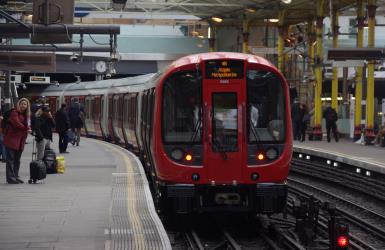
The average train between Tate Britain and Troxy takes 21 min and the fastest train takes 18 min. The train runs at least 14 times per hour from Tate Britain to Troxy. The journey time may be longer on weekends and holidays; use the search form on this page to search for a specific travel date.
Trains run every 5 minutes between Tate Britain and Troxy. The earliest departure is at 12:01 AM at night, and the last departure from Tate Britain is at 11:58 PM which arrives into Troxy at 12:19 AM. All services require a transfer at St. James's Park station and take an average of 21 min. The schedules shown below are for the next available departures.

27 min • 1 change
27 min • 1 change
22 min • 1 change
23 min • 1 change
25 min • 1 change
4h 59m • 1 change
23 min • 1 change
19 min • 1 change
22 min • 1 change
22 min • 1 change
21 min • 1 change
4h 59m • 1 change
22 min • 1 change
22 min • 1 change
21 min • 1 change
4h 59m • 1 change
22 min • 1 change
22 min • 1 change
21 min • 1 change
4h 59m • 1 changeWant to know about travelling from Tate Britain to Troxy? We have put together a list of the most frequently asked questions from our users such as: What is the cheapest mode of transport? What is the quickest option? How much do tickets usually cost? and many more.
No, there is no direct train from Tate Britain to Troxy. However, there are services departing from St. James's Park station and arriving at Limehouse DLR Station via Cannon Street station. The journey, including transfers, takes approximately 21 min.
Tate Britain to Troxy train services, operated by London Underground (Tube), depart from St. James's Park station.
Tate Britain to Troxy train services, operated by Dockland Light Railway (DLR), arrive at Limehouse DLR Station.
The distance between Tate Britain and Troxy is 6.2 km.
There is no direct connection from Tate Britain to Troxy. However, you can walk to St. James's Park station, take the subway to Cannon Street station, walk to Bank DLR Station, take the train to Limehouse DLR Station, then walk to Troxy.