
There are 5 ways to get from San Sebastián Station to Loiola by train (Renfe), bus, train, taxi, or foot
Select an option below to see step-by-step directions and to compare ticket prices and travel times in Rome2Rio's travel planner.
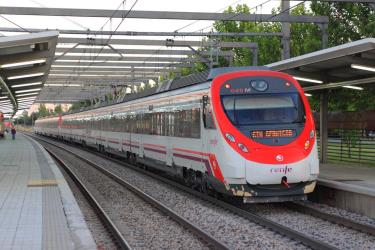
Train (Renfe)
best- Take the train from San Sebastián-Donostia to Loiolatrain C1
5 min€1Line 9 bus
- Take the bus from Tabakalera to Beharkobus 9 / ...
7 min€1–2Line 17 bus, train
- Take the bus from Estaciones- Renfe- Bus- Geltokiak to Ehunurteurrena / Centenariobus 17 / ...
- Take the train from Amara-Donostia to Loiola-Donostiatrain E2
13 min€3–5Taxi
- Take the taxi from San Sebastián Station to Loiolataxi 2.9 km
5 min€12–15Walk
- Take the walk from San Sebastián Station to Loiolawalk 1.9 km
22 min
San Sebastián Station to Loiola by train (Renfe)
Questions & Answers
The cheapest way to get from San Sebastián Station to Loiola is to train which costs €1 and takes 5 min.
The fastest way to get from San Sebastián Station to Loiola is to train which takes 5 min and costs €1.
Yes, there is a direct bus departing from Tabakalera and arriving at Beharko. Services depart every 20 minutes, and operate every day. The journey takes approximately 7 min.
Yes, there is a direct train departing from San Sebastián-Donostia and arriving at Loiola. Services depart hourly, and operate every day. The journey takes approximately 5 min.
The distance between San Sebastián Station and Loiola is 2 km.
The best way to get from San Sebastián Station to Loiola without a car is to train which takes 5 min and costs €1.
The train from San Sebastián-Donostia to Loiola takes 5 min including transfers and departs hourly.
San Sebastián Station to Loiola bus services, operated by dBUS, depart from Tabakalera station.
San Sebastián Station to Loiola train services, operated by Renfe Cercanias, depart from San Sebastián-Donostia station.
The best way to get from San Sebastián Station to Loiola is to train which takes 5 min and costs €1. Alternatively, you can line 9 bus, which costs €1 - €2 and takes 7 min.
What companies run services between San Sebastián Station, Spain and Loiola, Basque Country, Spain?
Renfe Cercanias operates a train from San Sebastián-Donostia to Loiola hourly. Tickets cost €1 and the journey takes 5 min. Alternatively, dBUS operates a bus from Tabakalera to Beharko every 20 minutes. Tickets cost €1–2 and the journey takes 7 min.
- Phone
- +34 912 32 03 20
- [email protected]
- Website
- Renfe Cercanias
Train from San Sebastián-Donostia to Loiola
- Ave. Duration
- 5 min
- Frequency
- Hourly
- Estimated price
- €1
- Website
- Renfe Cercanias
- Phone
- +34 944 333 333
- [email protected]
- Website
- Euskotren
Train from Amara-Donostia to Loiola-Donostia
- Ave. Duration
- 5 min
- Frequency
- Every 10 minutes
- Estimated price
- €1–3
- Website
- Euskotren


- Phone
- 943 000 200
- [email protected]
- Website
- dBUS
Bus from Tabakalera to Beharko
- Ave. Duration
- 7 min
- Frequency
- Every 20 minutes
- Estimated price
- €1–2
- Website
- dBUS
Bus from Estaciones- Renfe- Bus- Geltokiak to Ehunurteurrena / Centenario
- Ave. Duration
- 5 min
- Frequency
- Every 15 minutes
- Estimated price
- €1–2
- Website
- dBUS


- Ave. Duration
- 5 min
- Estimated price
- €12–15
Taxi Donosti
- Phone
- +34 943 46 46 46
- Website
- taxidonosti.com
Vallina Grupo
- Phone
- +34 943 40 40 40
- Website
- vallinagrupo.com
Want to know more about travelling around the world?
Rome2Rio's Travel Guide series provide vital information for the global traveller. Read our range of informative guides on popular transport routes and companies - including Need to know: Eurostar, How to travel India's Golden Triangle, and 5 delightfully under-the-radar French towns you need to visit - to help you get the most out of your next trip.
More Questions & Answers
San Sebastián Station to Loiola bus services, operated by dBUS, arrive at Beharko station.
San Sebastián Station to Loiola train services, operated by Renfe Cercanias, arrive at Loiola station.
Book your San Sebastián Station to Loiola train tickets online with Omio.
There are 1815+ hotels available in Loiola.